




Navy flawlessly repelled Red Sea attacks, yet civilian vessels suffered. The battle highlights an urgent need for advanced laser weapons against escalating drone threats.
by Kris Osborn, Warrior
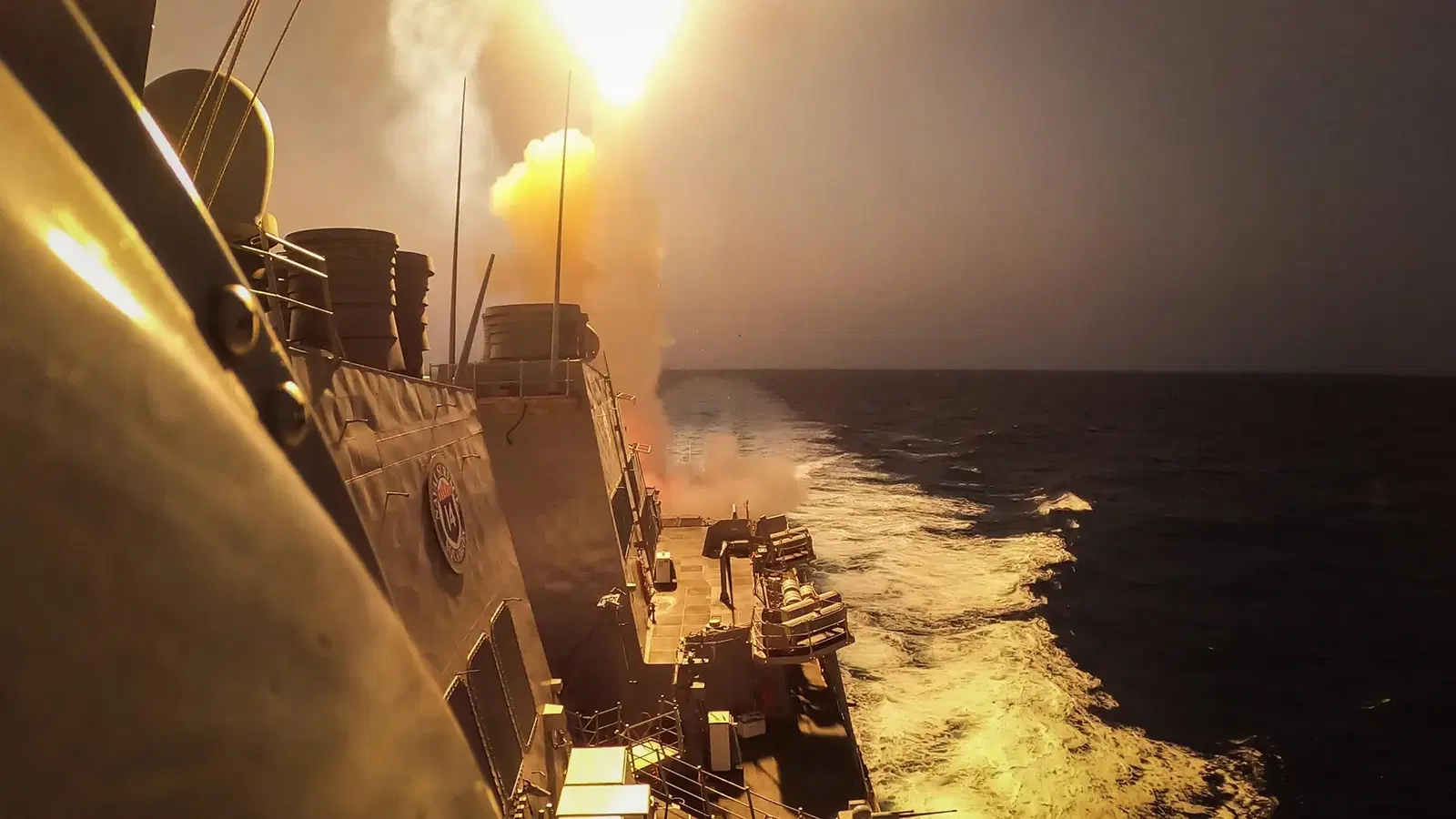
The US Navy’s record using guns, fighter jets, and interceptor missiles to shoot down and destroy Houthi missiles and drone attacks in the Red Sea was essentially “flawless,” yet civilian boats were hit and some are likely inclined to wonder just how “close” US Navy warships actually came to being hit. This is an important, if difficult question to answer, yet after more than a year or two of Houthi hostility in the Red Sea … not a single Navy ship was hit. Drones, cruise missiles and some small boats all attacked the US Navy, yet the service enterprised an expanding defensive effort to include ship-based command and control, Vertical Launch System fired interceptor weapons, deck mounted guns, EW and even fighter jet assistance with targeting and aerial drone shootdowns.
Houthi Attacks Hit Civilian Mariners
“I witnessed strikes from both crewed and uncrewed aircraft, observed warships defending against air and surface threats, and watched two rescues of civilian mariners from merchant ships struck by Houthi missiles,” Rear Admiral Kavon ‘Hak’ Hakimzadeh, Commanding officer of Carrier Strike Group 2, wrote in a an interesting essay reflecting on his combat experience published in the Center for Maritime Strategy.
Certainly the situation was a serious one, as US Navy warships were placed “under attack” on a regular basis for a considerable period of time, yet the overall experience verified the effectiveness of the Navy’s modernized weapons systems, reinforced emerging doctrinal concepts about multi-domain targeting and highlighted the effectiveness of US Navy sailors and maritime warriors. Certainly a ship “could” have been hit … and the threat was very real, yet US Navy sailors quickly became quite adept at “intercepting” incoming Houthi drones with Aegis radar, airborne fighter jets, satellites and ship-based command and control.
The Commanding Officer of Carrier Strike Group 2 in the Red Sea Rear. Admiral Javon Hakimsadeh told Warrior in 2024 that the Navy has been analyzing “lessons learned” from the Red Sea and Houthi attacks and exploring new weapons applications and Concepts of Operation to prepare for future drone and missile threats against their ships and assets.
Shooting Down Drones
One of the key points Hakimsadeh told Warrior was that “magazine depth” was extremely important to the kinetic “counter-drone” fight given the threats posed by large swarm attacks. Projectiles, bullets and interceptors are needed in great numbers to “blanket” an area with defensive fire. Precision and multi-domain command and control are also critical as well; Hakimsadeh explained that surface warships were able to interface with ground and air command and control nodes to verify targets, track threats and ultimately intercept attacks. The methods of counter drones continued to expand for the Navy as attacks continued in the Red Sea, and Hakimsadeh was clear that lessons learned would quickly be applied to the growing counter-drone fight.
“How do we expand the options that a sailor has to be able to take care of a drone? And I think in the near term, it’s probably going to be something along the lines of a gun system or a kinetic way to do it with guns and ordnance, but the long -term, I’d love to see things like directed energy, you know, something that can just recharge and give you that almost infinite magazine size, right? You don’t have to worry about your magazine size, because if you can keep generating the power to be able to launch your directed energy, if you will. “ Hakimsadeh told me back in 2024 upon returning from the Red Sea.
Hakimsadeh told me maritime warfare operations against Houthi attacks in the Red Sea involved a “first-time” combat use of upgraded variants of several key weapons systems.
“Our training works and our doctrine works. The CNO says it all the time…. our people are the secret weapon. They reacted the way they were supposed to and the weapons systems responded the way they were supposed to. We knew everything was going to work but we got real world experience – it's a starting point to move on to the next level,” Hakimzadeh told Warrior at the USS Laboon homecoming in Norfolk, 2024.
The combat “firsts” in the Red Sea with Hakimzadeh’s Carrier Strike Group were extensive, including a first air-to-air engagement by an EA-18G Growler, first combat employment of upgraded weapons such as the AGM-154C JSOW glide bomb, AGM 114K Hellfire and AGM-88E AARGM anti-radiation missile designed to destroy enemy air defenses. Hakimzadeh also described new tactics and concepts of operation, such as the first “surface-to-air engagement of a hostile unmanned aerial vehicle by a US warship.”