





By Kris Osborn, President, Warrior
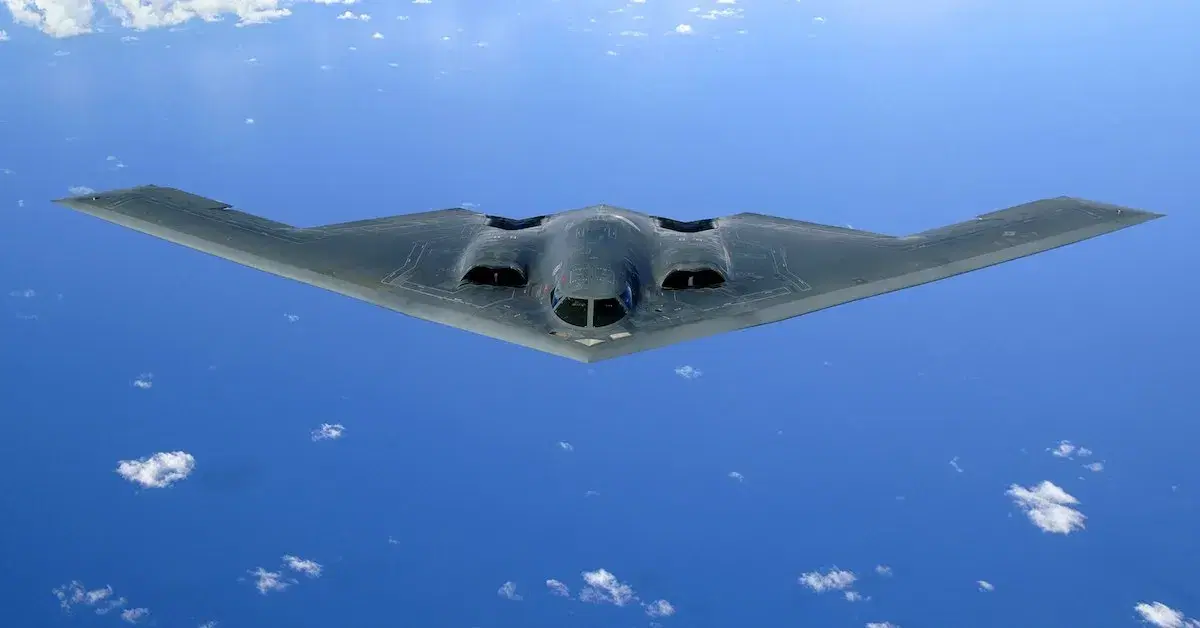
The Successful B-2-generated Operation Midnight Hammer not only demonstrated the continued effectiveness and utility of the upgraded B-2 bomber but also sharpened focus upon the often discussed and much criticized decision to "stop" B-2 production at 20 aircraft at the close of the Cold War.
The decision to truncate the Air Force fleet of B-2 bombers to 20 years ago has arguably had a lasting and somewhat damaging impact upon the Air Force, as the service has been operating with a bomber “deficit” for many years now. The end of the Cold War led decision-makers to massively scale back a planned fleet of 75 B-2s to 20, a move which seemed to compromise the US Air Force’s ability to project large-scale stealth bombing power in any great power conflict.
Certainly a larger force of B-2s would have operated as a stronger deterrent against a great power adversary, given that large numbers of bombers would be needed to form an offensive envelope over a major adversary, destroy air defenses and open up a safer air corridor for 4th and 5th-generation bombers to attack. A major air attack campaign against an advanced great power adversary would require a large mass of attacking bombers spread across a wide combat envelope to exact a needed effect, as both Russia and China are extremely large countries with high numbers of air defenses dispersed throughout their territory protecting vital assets. An initial high-altitude bombing strike would need to cover a wide area to disable any dispersed, yet increasingly interconnected network of air defenses in order to ensure effectiveness in establishing air superiority.
Not Enough B-2s
While the B-2 has been and continues to be an extremely advanced and uniquely capable stealth bomber, Sun Tzu’s famous “mass matters” concept is still extremely relevant today as the US seeks to deter major rivals with a large force and a “peace through strength” approach to national security. Simply put, more B-2s would have been much better in recent decades and would still be extremely relevant today, particularly as the Air Force waits for larger numbers of B-21s to arrive and faces major threats from China and Russia.
For decades, the Air Force has been clear that its Combatant Commander demand for bombers exceeds the available supply, and prior to the arrival of the B-21, the service had not built a new platform in many years. This reality has over the years led many critics and observers and former service members to express concern that the Air Force operated a “geriatric” force. The service has shown that its B-52 and B-1B bombers can be massively upgraded to maintain relevance and remain effective for decades beyond their intended service life, as both airplanes are almost completely different platforms than they were at their inception.
Today’s B-2s are now more than 30 years old, yet amazingly the platform has remained relevant and dominant for years beyond what was anticipated due to very successful modernization efforts. Today’s B-2 flies with a 1,000-fold faster computer processor, sensors able to alert crews of the location of enemy air defenses called the Defensive Management System, a vastly expanded arsenal, digital cockpit upgrades and reconfigured weapons interfaces and fire control. The B-2 has been integrated with a wider and more advanced arsenal of weapons, making it increasingly capable of destroying extremely difficult to reach targets. Its stealth properties have also likely been maintained and upgraded with new thermal management technologies or radar absorbent materials.
B-2 Upgrades
These B-2 upgrades have been extremely important given that Chinese and Russian air defenses are reportedly modernized to detect even some stealth and able to operate on a wider range of frequencies and leverage high-speed computer processing and digital networking.
The US Air Force B-2 bombers have performed quite well in a number of conflicts over the course of many years, to include the war in Afghanistan following 9-11, Libya and others. It would make sense if many Pentagon and government leaders have lamented and in some cases, regretted, cancelling the planned B-2 fleet. The key question moving forward for the B-2 is that, now that it has been modernized to remain effective for many more years, how effectively will it network with the arriving fleet of B-21s. The Air Force does plan a large fleet of B-21s totalling at least 100, yet it will be many years until they arrive in large numbers. Therefore, as the B-21 arrives, it will need to interoperate effectively with the B-2 with effective networking technologies, sensing, data exchange and targeting coordination.
Kris Osborn is President of Warrior Maven – Center for Military Modernization. Osborn previously served at the Pentagon as a highly qualified expert in the Office of the Assistant Secretary of the Army—Acquisition, Logistics & Technology. Osborn has also worked as an anchor and on-air military specialist at national TV networks. He has appeared as a guest military expert on Fox News, MSNBC, The Military Channel, and The History Channel. He also has a Masters Degree in Comparative Literature from Columbia University