



Allied forces are deploying AI-enabled software to bridge incompatible datalinks, instantly translating intelligence to jam enemy signals and neutralize electronic threats across the battlefield in real-time.
By Kris Osborn, Warrior Maven
“Jamming” enemy radar, targeting and communications, “hardening” electromagnetic signals against intrusion and sending NATO-compatible data regarding EW-specific intelligence securely through combat-critical datalinks … are all elements of warfare which are becoming increasingly complex, AI-enabled and cyber-dependent.
This adds flexibility, hardening and communications options as well as new innovative methods of attack, yet the advantages of increased transmission and data-sharing across otherwise disconnected datalinks can also increase vulnerability. For many years, differently configured EW-focused protocols and IP standards used for combat datalinks have been challenged to instantly or quickly exchange data to identify threats in near “real-time.”
Historically, information of critical importance to EW transmissions for sensing, jamming or securing data have had to “wait” for data from one signal or datalink to be acquired, analyzed and then subsequently transmitted to another otherwise incompatible datalink. For instance, should time-sensitive data arrive through Link 22 protocol, it might be able to gather, analyze, translate and transmit the time-sensitive EW information to Link 16 or another datalink, radio or terminal.
Now, industry innovators are working with military customers to embed new communications protocol into standard, interoperable software to enable more ubiquitous, high-speed, yet secret transmission of EW-specific data … to enable close to real-time data sharing between otherwise incompatible datalinks. Curtis-Wright, for example, has integrated a new NATO standard protocol called Cooperative Electronic Support Measure Operations (CESMO) into its TCG LinkPRO software. As a result, CESMO data can be operated alongside datalinks such as Link 16, VMF, Link 22, SADL, Link 11 and JREAP.
"For decades, the sharing of high-fidelity electronic intelligence between allies was too slow to be effective," Roark McDonald, vice president and general manager of Tactical Communications, Curtiss-Wright Defense Solutions, said in a company statement. "By adding CESMO, we’ve created a 'universal translator' for electronic warfare. This ensures that when one ally detects a threat, the others know about it in near real-time."
With CESMO, forces can see a live map of enemy signals across land, air, and sea without waiting for manual data translations, and allied NATO countries can operate from a single, integrated digital picture of the electronic battlefield. Due to the implementation and use of CESMO protocols, otherwise disconnected datalinks can interoperate through TCG LinkPRO. Curtiss-Wright developers explain CESMO in terms of message “routing” and “low-level protocol off-loading,” something which enables seamless, high-speed transmission of time-sensitive EW data packets intended for “jamming,” “encryption” and “signal-specific intelligence transmission.” This substantially reduces latency and expedites secured transmissions. Perhaps one datalink receives a threatening “line-of-bearing” or signal from enemy radar or radio communications. This presents a time sensitive need to analyze the protocol of the signal and transmit intelligence information to terminals, receivers, command and control nodes and other datalinks. CESMO is engineered to accomplish this in a secure, yet rapid fashion to expedite combat intelligence sharing and decision making.
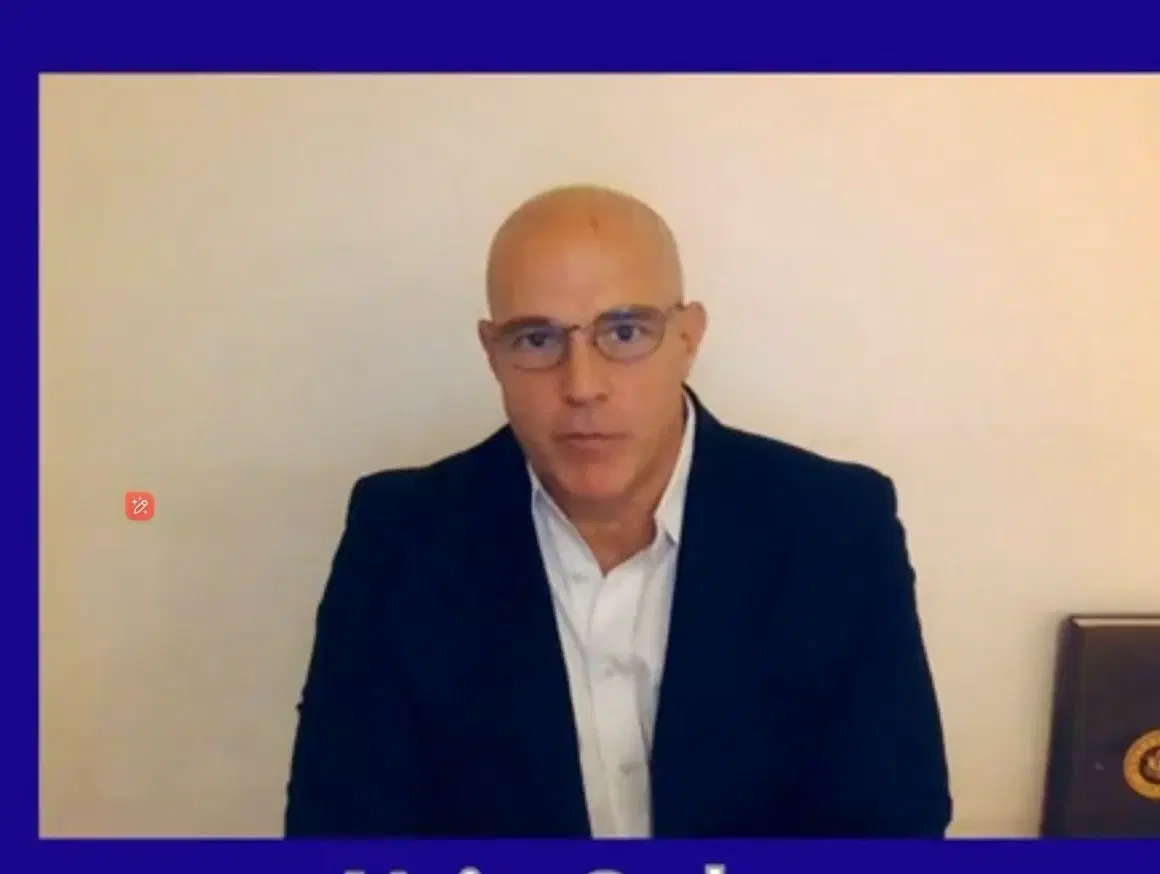
“Every single message that is implemented in CESMO is in support of this coordination effort…and it's done in near real time….. no matter what protocol you have. CESMO is a binary efficient protocol… that means that there's absolutely no wasted space in a digital transmission. It's a variable format. So the packets are really super tiny. They can get very big if you have a lot of data. But we're not exchanging raw sensor information. We're exchanging processed information that's been distilled down to just the core elements,” Peter Ellis, Principal Engineer, Tactical Communications Group, Curtiss-Wright Defense Solutions, said in an interview with Warrior.
Due to the small size of the IP packets and the configuration of the 1s and 0s, CESMO messages are designed to pass over a LAN or WAN connection as well as SatCom and HF. The concept of operation is quite clear, as it pertains to interoperability and communications efficiency. Smaller packets of data can improve flexibility and survivability as well, given that they are less likely to be disrupted or interfered with by an adversary.
CESMO is the result of redesigned NATO standard protocol which has been in operation for many years to enable data sharing and interoperability.
“We [the CESMO community] updated the protocol. It's a NATO standard protocol that was developed many many years ago. I think 1998 was when they first started developing it, but it went through some growth periods where they realized that in order to take it operational, they needed to reinvent it. That's when I got involved in 2017. We updated the protocol alongside other NATO allied nations,” Ellis said. “We sat down, we did some technical analyses and then we took it right into the field in operational exercises. Some of our NATO allies have been running this operationally 24-7 for the past five years.”
CESMO comes into full operational transmission capability when it integrates with a special gateway software, Curtiss-Wright’s TCG HUNTR for example, something which essentially consumes and “translates” CESMO information across different platforms and transport layers. Ellis explained that this “translation” can, for instance, help aircraft coordinate with other mission assets that communicate on different tactical data links. The CESMO network will help detect and identify a hostile or suspect target based upon its electronic signature.
“You can bring that into HUNTR, put it into Link 16, and now the allied aircraft that are going to intercept it have the identification already on their Link 16 screen because CESMO protocol was used,” Ellis said.
