



By Kris Osborn, Warrior
"Swivel Chair" was the metaphor used by the US Army's Director of Counter UAS University to describe the tactical challenges associated with countering drone attacks.
The imagery is excellent as it captures the complex, interwoven and varied conceptual and tactical variables necessary for drone defense. Different attack and threat scenarios require different countermeasures, a key reason why a "layered" defense consisting of a range of different defenses is necessary. Perhaps a cloudy environment makes it too difficult to use lasers? Perhaps a drone attack from populated urban area makes it too dangerous to civilians to generate a kinetic explosion dispersing fragmentation? Perhaps the attack is a swarm of drones best disable by a proximity fuse dispersing explosives across a wider target "area?" There are also many scenarios where an attack drone swarm would best be disabled by an electromagnetic signal to "jam" or "disable" or even "take over" the attacking drones.
These scenarios involve critical time sensitive decisions where in life and death can hang in the balance of timing and the immediate choice of an optimal countermeasure. Humans can decide about lethal force, yet AI-enabled systems can perform analyses and make recommendations based on a host of otherwise disconnected variables in milliseconds. Blending these attributes by combining those unique faculties woven into human cognition with the speed of AI-enabled computing .... is exactly what the US Army's fast-growing Counter-UAS University at Ft. Sill is focused on.
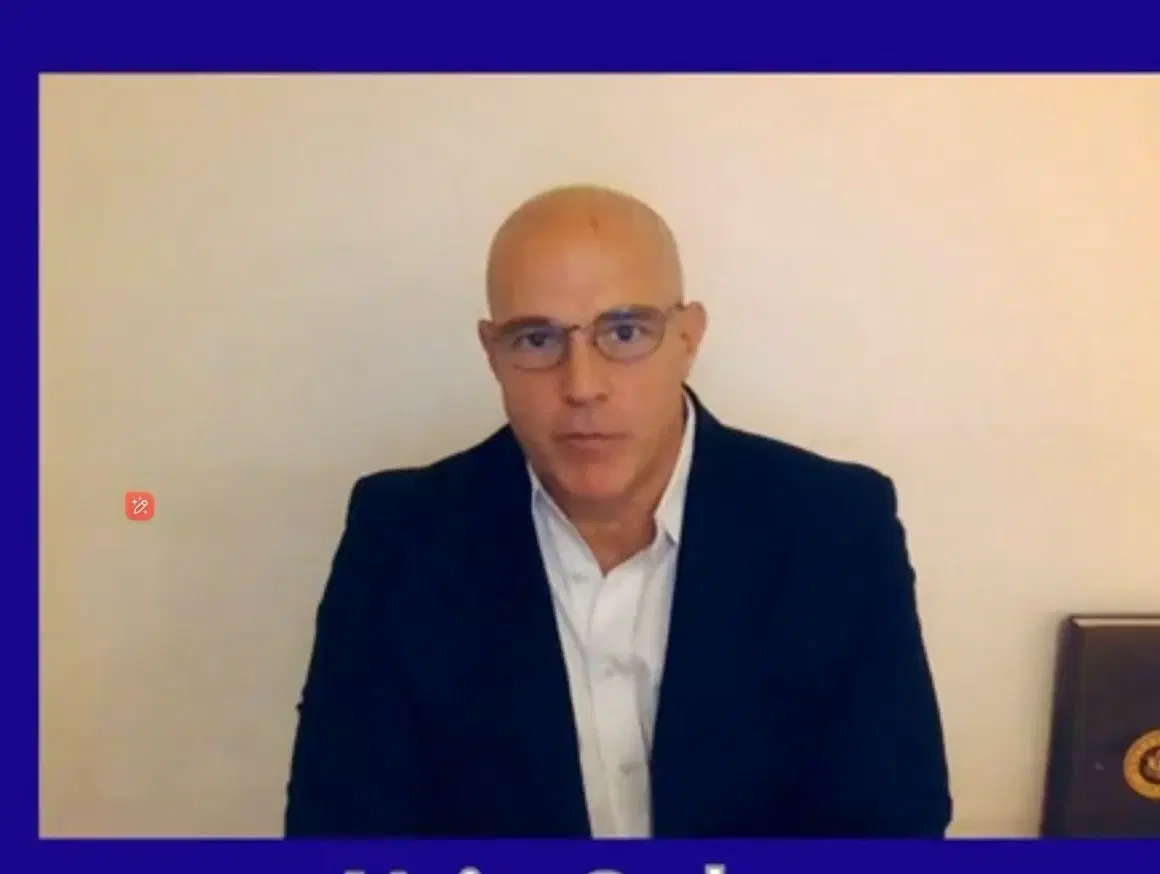
“We want to look at it as a decision aid, right?.... Something to help quickly and efficiently identify threats, determine engagement solutions and pair the best sensor to the best shooter. This is designed to provide that commander or that operator decision space and time to determine what they're going to do. Utilizing AI as that decision tool will hopefully alleviate the inefficiency that currently exists with the kind of the swivel chair operations we're doing right now between multiple systems,” Col. John Peterson, Director, Counter UAS University, Ft. Sill, Okla., told Warrior.
Peterson talked about AI in the context of flexibility, reliability and the need to adapt to fast changing threats. AI systems are becoming increasingly reliable, meaning they are able to at times perform analytics and accurately contextualize information which might not be part of its database. AI systems, generally speaking, are only as effective as the database they draw from or bounce information off of, however advanced algorithms are increasingly able to determine context and meaning related to information it has not previously been exposed to. AI is not only becoming more reliable through what's called "zero trust" industry and Pentagon efforts, but it is also increasingly capable of making more subjective kinds of nuanced determinations. This, as Peterson explains, is why AI-enabled analytics needs to remain "adaptable" to change and aligned with human decision making.
“We have to be as adaptable to the threat as it changes over time…..and that's kind of what our university focuses on. We will be taking those lessons learned, taking our observations and trying to make the most relevant curriculum we can and implement that into our schoolhouse and the training of our joint partners," Peterson told Warrior. “Unfortunately, the enemy gets a vote and they have an opportunity to adjust how they execute their tactics, techniques and procedures. We have to be adaptable to that and layer our capabilities between non-kinetic capability, potentially kinetic capability, or multiple levels of kinetic and non-kinetic capability combined. We will use different types of effectors that can do different things to potentially get after any given threat,” Peterson said.
Kris Osborn is the President of Warrior Maven – Center for Military Modernization. Osborn previously served at the Pentagon as a highly qualified expert in the Office of the Assistant Secretary of the Army—Acquisition, Logistics & Technology. Osborn has also worked as an anchor and on-air military specialist at national TV networks. He has appeared as a guest military expert on Fox News, MSNBC, The Military Channel, and The History Channel. He also has a Masters Degree in Comparative Literature from Columbia University.
Sponsored By

