


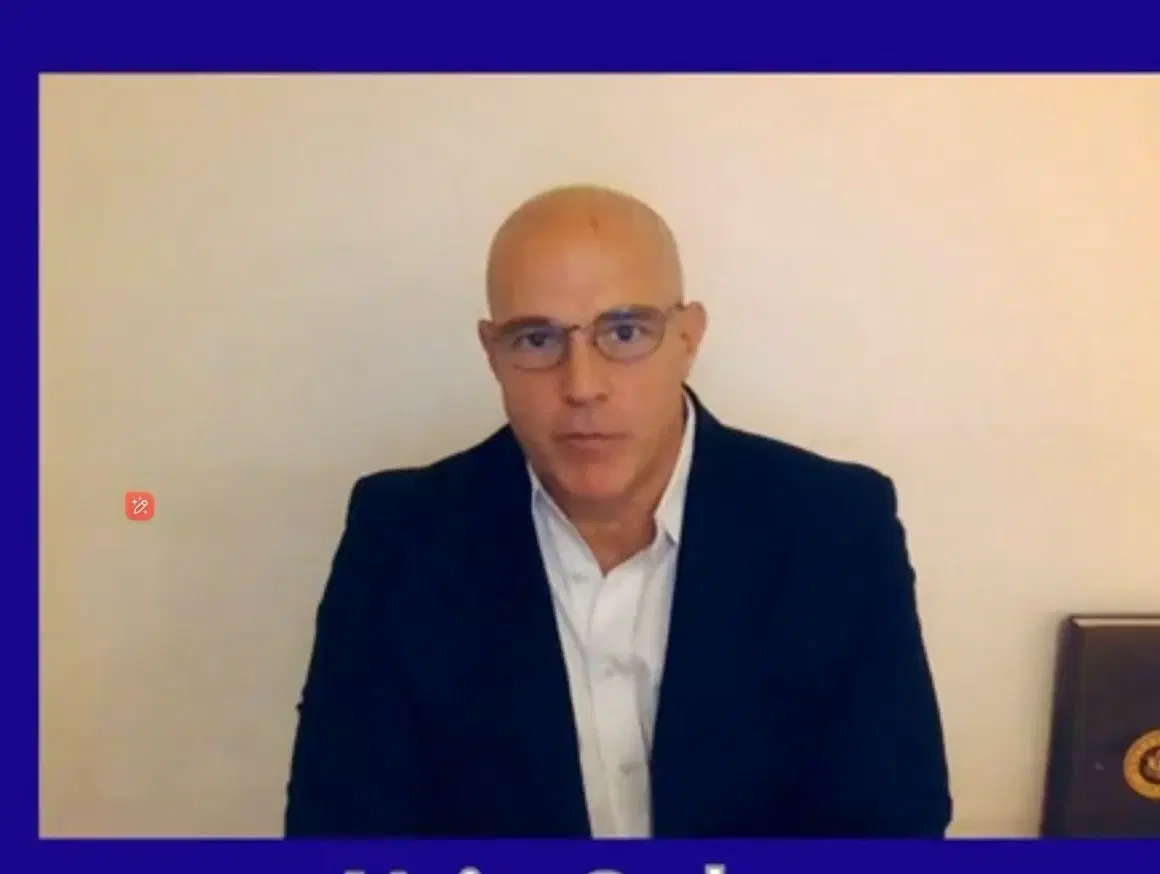

The idea is to use advanced technology to determine the “orbital plane,” frequency and trajectory of enemy satellites
By Kris Osborn, President, Center for Military Modernization
Using cloud cover, snow and weather obscurants to maneuver, inflating rubber “tank” decoys and operating beneath tree cover or uneven terrain … are all critical ways ground forces have sought to elude detection from enemy surveillance satellites.
However, what if advanced computer algorithms and cutting edge technologies are able to pinpoint the exact time, speed, location and “field of regard” of enemy satellites? Using commercially developed and patented technologies, Northern Virginia based startup Royce Geo demonstrated that capability earlier this year in close coordination with a large group of vendors and Army weapons developers at Fort Huachuca, Ariz.
The US Army continues to work with industry innovators to develop breakthrough satellite detection and data processing technology designed to enable previously unprecedented ability to discern an enemy satellite's collection window and coverage using commercial information and advanced automation algorithms within Royce Geo’s CURVE Operational Environment (OE).
The idea is to use advanced technology to determine the “orbital plane,” frequency and trajectory of enemy satellites and establish what’s called a “chain of custody” to calculate the time window and location at which an enemy satellite sensor has “visibility” of ground operations. Once this time window is calculated, then ground commanders can adapt a scheme of maneuver designed to elude detection or simply remain “out-of-view” of an enemy satellite's “field of regard.”
The technology, some of the details of which are proprietary and potentially sensitive, is only described by innovators in a general way, however Royce Geo’s leadership team describes the operational value and technical mechanisms which enable these calculations. Over the summer, Royce Geo’s technology was demonstrated and tested with Army networking experts, scientists, engineers and operational commanders at Fort Huachuca, Arizona, during a cutting-edge network experimentation exercise called “Vanguard.”
“Our Space Intelligence microservices are resident to our CURVE OE, and our satellite access window tool allows us to calculate all of the peer-to-peer adversaries leveraging space imaging platforms to monitor US and coalition force activity. At Vanguard, we used it to track and maintain the chain of custody of Red or enemy space-based collection satellites. This allowed Field commanders to shape the TTPs on where you would be moving around the battle space, with constant situational awareness of space based ISR platforms,” Adam Estrada, CTO of Royce Geo, told Warrior in an interview.
This, Estrada said, added new dynamics to the exercise because ground commanders could move their forces “knowing when a satellite was overhead, avoiding exercising in plain sight. An ability to elude the “field of regard” or “aperture” of an enemy satellite through a “access window feasibility tool” prevents an enemy from being able to observe a ground commander’s scheme of maneuver.
“We go through a well vetted source to get the orbital plane for each satellite and then from that we calculate the field of regard, ground sample distance (GSD), off nadir angle (ONA), and resolution,” Estrada said.
China has long been known to operate anti-satellite weapons, yet in recent years the PRC has been fast-tracking the addition of new spy satellites, as described by the Pentagon’s 2023 Military and Security Developments Involving the People’s Republic of China.
“The PRC seeks to enhance the PLA’s command and control C2 for joint operations and establish a real-time surveillance, reconnaissance, and warning system, and it is increasing the number and capabilities of its space systems, including communications and intelligence satellites, as well as the BeiDou navigation satellite system,” the report says.
As competition between the U.S. and near-peer competitors like China heats up, it is clear both are pushing for more capabilities in the space domain. The combination of commercial satellite data and advanced analytics is a real gamechanger, providing both critically important near real-time intelligence and also a window into the intelligence gathering capabilities of our adversaries.
Kris Osborn is President of Warrior Maven – Center for Military Modernization. Osborn previously served at the Pentagon as a Highly Qualified Expert with the Office of the Assistant Secretary of the Army—Acquisition, Logistics & Technology. Osborn has also worked as an anchor and on-air military specialist at national TV networks. He has appeared as a guest military expert on Fox News, MSNBC, The Military Channel, and The History Channel. He also has a Masters Degree in Comparative Literature from Columbia University.
